
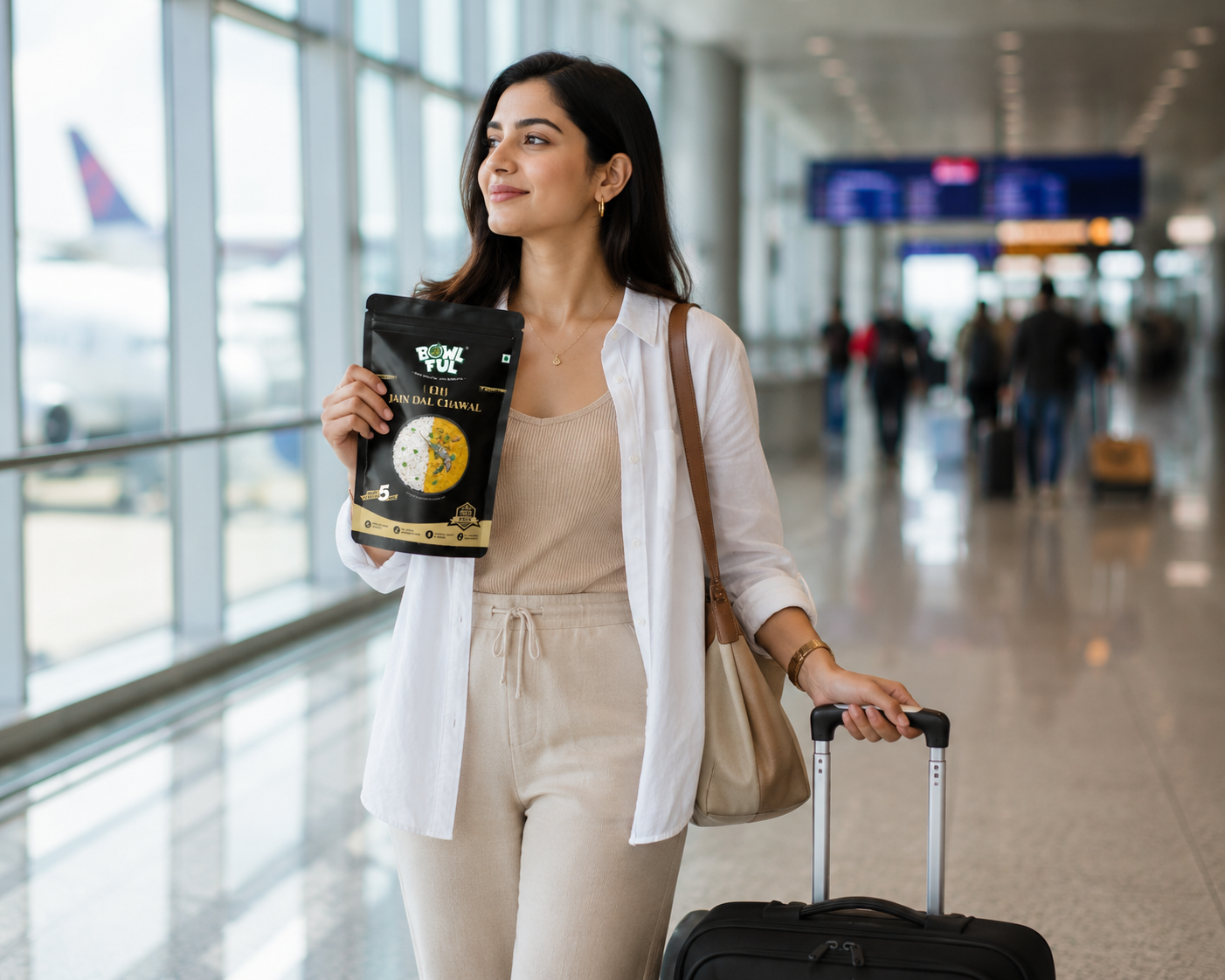
If you follow a Jain diet, you already know the problem. Every time you travel, every time you stay somewhere that isn't home, every time you're at an office or a hostel or a dormitory abroad, you face the same question. What am I going to eat?
Indian restaurants don't always verify their Jain claims. Hotel food is unreliable. Packaged food lists onion powder or garlic extract in the fine print. And the further you are from home, the worse this gets.
This guide exists to answer that question properly.
What makes food genuinely Jain?
Jain dietary principles exclude all meat and fish, and additionally exclude root vegetables like onion, garlic, potato, carrot, radish, and beetroot, because harvesting them involves destroying the whole plant. The strictness of practice varies. Some Jain practitioners avoid all root vegetables at all times, others observe during specific periods. What is consistent across all Jain practice is the exclusion of onion and garlic.
For ready to eat food to be reliably Jain, it must be free from onion in all forms including fresh, dried, powder, and extract. It must be free from garlic in all forms including fresh, dried, powder, and extract. And it must be prepared in a facility that avoids cross-contamination with non-Jain ingredients.
Why most packaged food fails Jain requirements
Onion and garlic are the two most common flavour bases in Indian cooking. Almost every packaged Indian food product, from masala mixes to retort curries to instant meal kits, uses onion powder or garlic extract as a base flavouring. They're cheap, they work, and they're in almost everything.
Reading the label carefully is essential. "No added onion or garlic" in the product name doesn't always mean the product is free from onion and garlic derivatives in the ingredient list.
Bowlful's Jain range
Bowlful's Jain products are made without onion, garlic, or any root vegetables. The flavour base uses asafoetida (hing), cumin, coriander, tomatoes, and authentic regional spices to build the depth that onion and garlic normally provide. Each Jain product is prepared separately from non-Jain products to avoid cross-contamination.
The current Jain range includes:
Jain Dal Chawal — toor dal, rice, tempered with cumin and ghee, no onion no garlic
Jain Paneer Butter Masala — soft paneer in tomato-butter gravy, fully Jain compliant
Jain Pav Bhaji — spiced vegetable mash without onion or potato
Jain Dal Makhani — black lentils slow-cooked with cream, no onion no garlic
All Jain meals are freeze-dried. No preservatives, no artificial colours or flavours, 12-month shelf life, ready in 5 minutes.
For Jain travellers, domestic and international
Travel is the hardest context for Jain eaters. Train food, airline meals, and hotel buffets are unreliable at best. International travel makes this significantly worse. Indian restaurants abroad rarely understand the distinction between vegetarian and Jain, and requests for no garlic are frequently misunderstood.
Each Bowlful Jain pouch weighs under 100g dry and rehydrates to a full meal. 10 pouches add less than 1kg to luggage. A week's worth of reliable, fully Jain-compliant meals fits in a corner of any bag.
Most airlines allow sealed packaged food in carry-on. Bowlful pouches comply with airline packaging standards. Food products may need to be declared at customs in some countries, so check the rules for your specific destination before travelling. Australia and New Zealand have strict biosecurity rules around food products.
For Jain students studying abroad
This is the most underserved use case in the ready to eat food market. Jain students at universities in the US, UK, Canada, Australia, UAE, and Germany face a near-impossible situation. University cafeterias don't cater for Jain requirements, Indian restaurants can't guarantee compliance, and cooking from scratch requires sourcing specific Jain-compliant ingredients that often aren't available locally.
The practical solution most Jain students abroad use is to stock a semester's supply of reliable Jain meals. 30 to 40 Bowlful Jain pouches covers approximately 6 weeks of backup meals, for evenings when there's nothing safe to eat, exam weeks when cooking isn't possible, and weekends when the cafeteria is closed.
For Jain eaters at work
Office lunches are a daily problem for Jain professionals. Ordering from Swiggy or Zomato without verified Jain options means either eating something you're uncertain about or going hungry. A Bowlful Jain pouch at your desk, Dal Chawal or Jain Paneer Butter Masala, means you always have a reliable option. All you need is an electric kettle, which every office has.
For Jain families stocking at home
Jain ready to eat food works as a kitchen staple in exactly the same way it works for anyone else. It's the meal you reach for on evenings when cooking isn't happening. The 12-month shelf life means stocking up isn't a problem. Keeping a few Jain pouches in the kitchen ensures there's always a reliable option, regardless of what's in the fridge.
Frequently Asked Questions
What is Jain ready to eat food?
Jain ready to eat food is packaged food prepared without onion, garlic, or any root vegetables, in compliance with Jain dietary principles. It provides convenient meal options for Jain eaters who need reliable, compliant food for travel, office, hostel, or daily home use.
Is Bowlful Jain food really free from onion and garlic?
Yes. Bowlful's Jain products contain no onion, no garlic, and no root vegetables in any form including powder, extract, or paste. The Jain range is prepared separately to avoid cross-contamination. The ingredient list of each Jain product can be verified on the product page.
What Jain meals can I take on an international flight?
Sealed, packaged food is generally permitted in carry-on luggage on most airlines. Bowlful Jain pouches are sealed, compact, and under 100g each. Always check the specific airline's food policy and destination country customs regulations before travelling, as rules vary.
Is there Jain ready to eat food available for students abroad?
Yes. Bowlful's Jain range ships across India for students to stock before departure. Many Jain students take 20 to 40 pouches for a semester abroad. Check the website for current international shipping availability.
What is the difference between Jain food and vegetarian food?
Vegetarian food excludes meat, poultry, and fish. Jain food additionally excludes all root vegetables including onion, garlic, potato, carrot, radish, and beetroot, because harvesting them destroys the whole plant. Vegetarian food is not automatically Jain compliant.
Which Bowlful Jain meals are best for travel?
All Bowlful Jain meals are travel-ready, sealed, under 100g, and require no refrigeration. For travel specifically, Jain Dal Chawal and Jain Khichdi Kadhi are the most popular choices as they are light, easy to digest, and work well with minimal water temperature variation.
Can I find Jain ready to eat food abroad?
In most international markets, genuinely Jain-compliant packaged food is extremely limited. Indian grocery stores abroad may carry some options, but ingredient verification can be difficult. Carrying a supply from India before departure is the most reliable approach for Jain travellers and students.
Share:
Why Bowlful Is Not Instant Food - It's Better Than That
Bowlful vs MTR vs Gits - What Is the Actual Difference Between Ready to Eat Indian Food Brands?